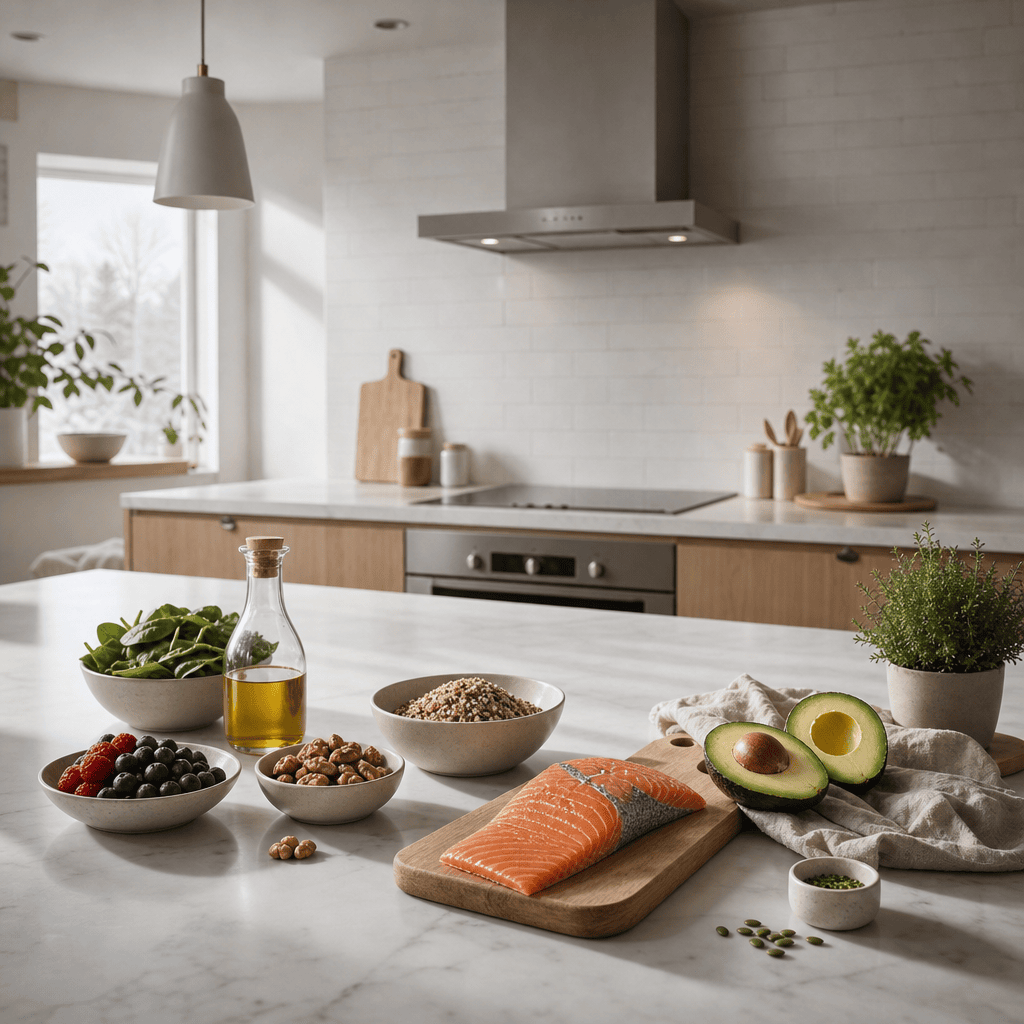
If you’re comparing the MIND diet vs. Mediterranean diet, start with what’s already on your plate. Both patterns make room for vegetables, beans, whole grains, nuts, fish, and olive oil. The Mediterranean diet gives you a broad way to plan meals. The MIND diet borrows from Mediterranean and DASH eating patterns and puts more emphasis on specific foods, especially leafy greens and berries, because it was developed to study diet and cognitive health.
MIND diet vs. Mediterranean diet at a glance
Mediterranean diet
MIND diet
What it emphasizes
Vegetables, fruit, whole grains, legumes, nuts, and olive oil.
Many of the same foods, with separate emphasis on leafy greens and berries.
Fruit and vegetables
Choose a range of fruits and vegetables you enjoy.
Give leafy greens and berries a regular place in your meals. Other produce can still fit.
Example meal
Chicken, roasted peppers, brown rice, and an apple.
A similar meal with spinach or kale and berries for dessert.
Research focus
Studied widely in relation to overall and cardiovascular health.
Developed to study whether an eating pattern might help slow cognitive decline.
The simplest way to see the difference is at the grocery store. A Mediterranean-style list might include tomatoes, peppers, apples, beans, and olive oil. To bring in more of the MIND approach, add frozen blueberries for breakfast and a bag of spinach for lunches or soups.
What does the research say about the MIND diet and memory?
A three-year randomized trial tested the MIND diet in older adults who had a family history of dementia and no cognitive impairment at the start. Both groups received guidance to modestly reduce their calorie intake. By the end of the trial, changes in cognitive scores did not differ significantly between the MIND diet group and the comparison group.
Adding blueberries is an easy way to bring variety to your meals. The trial did not establish that a specific food swap or weight loss by itself improves memory.
A simple one-day menu that fits both approaches
Meal
What to make
An easy swap
Breakfast
Oatmeal with plain yogurt, blueberries, and walnuts.
Use frozen berries or stir them into the oats while they cook.
Lunch
Whole-grain pita with chickpeas, spinach, cucumber, and lemon–olive oil dressing.
Use white beans or serve the filling over leftover brown rice.
Dinner
Salmon with broccoli and barley, plus a small spinach salad.
Swap the salmon for lemon-oregano chicken for a Mediterranean-style dinner.
If you’re shopping for one person, start with one leafy green, one bag of berries, and one tin of beans. Use the greens in a pita today and stir them into soup tomorrow. Keep the berries in the freezer so you can take out what you need.
Already making noodle soup? Try adding a handful of spinach or chopped kale near the end of cooking. It’s a simple way to give leafy greens a place in a familiar meal.
Ramen prep in a home kitchen. Try adding spinach or kale to your next bowl.
Which eating pattern should you start with?
Start with the Mediterranean approach if you want a flexible way to build dinners around foods you already buy. Try the MIND approach if the specific emphasis on berries and leafy greens helps you decide what to put on your shopping list.
If weight management is also on your mind, compare one meal you actually eat. Write down your usual lunch and the chickpea pita version. Ask which one is easier to make, which you enjoy more, and which you’d choose again on a busy day. The GuessWeight meal comparison guide walks through comparing one change at a time.